While tending my Plot 46 beds at the Maple Hill Urban Farm where I am researching the benefits of regenerative agriculture, I was surprised at the amount of plastic debris I was finding in the soil. During the 2024 growing season, I collected bits of plastic and kept them in a little metal box, like a set of specimens for further study back at the lab.
Perhaps a surprise to many, plastics are even more concentrated in terrestrial settings than in water (Falconi et al. 154). Plastics get into agricultural soils from compost from domestic waste (e.g., green bin programs), biosolids (from sewer sludge sold as fertilizer), the breakdown of various plastic films and filaments used in agriculture, and from single-use and other plastic waste released into the environment. Plastics stay in the soil for an indeterminate time. As petroleum-derivative products, plastics become toxic as they break down and create affinities for pesticides and other toxins. The greatest danger comes from microplastics (less than 5 mm) that negatively impact soil organisms and soil fertility and can even enter plants that become our food (168).
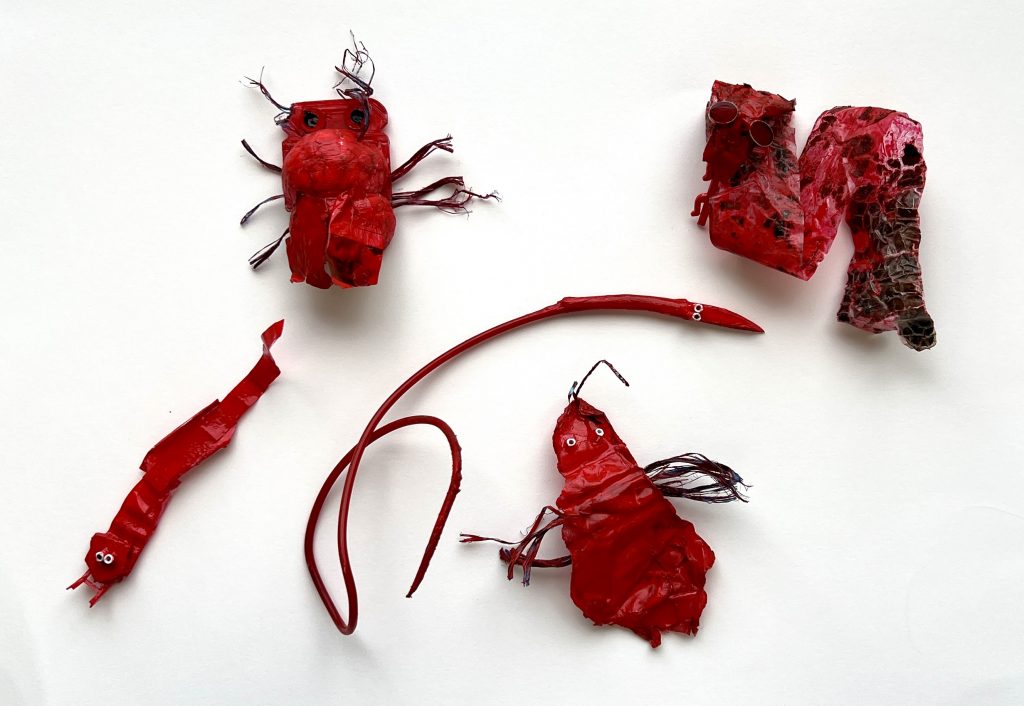
Back in my studio in the fall, I washed and sorted the aesthetically promising plastic pieces I had collected during the summer. Using glue and acrylic paint, I assembled them into five mini-sculptures of critters I might imagine in the soil. The timing worked out well. I was able to include them in a paper I was working on entitled “My Art is Garbage,” as a warning that plastic is everywhere in the food production system.
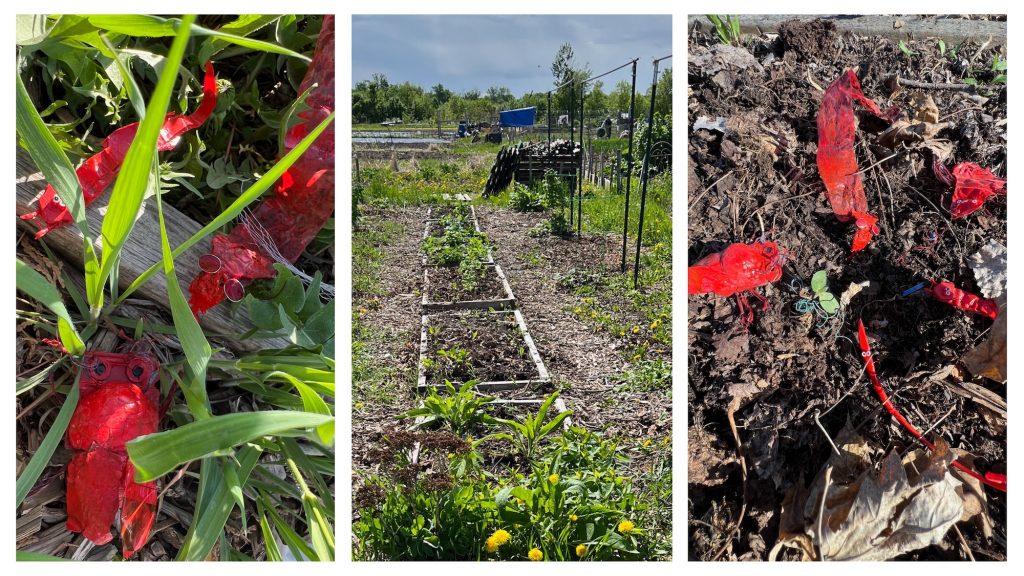
In the spring of 2025, I took the “plastic pests” back to the farm for a photo shoot in my strawberry patch. I used my photos in creating a photomontage of the critters in and among the emerging strawberry plants. Inspired by “Strawberry Fields Forever” by Lennon and McCartney (1967), I wrote a mini-poem Plastic Pests Forever, which completed the piece.
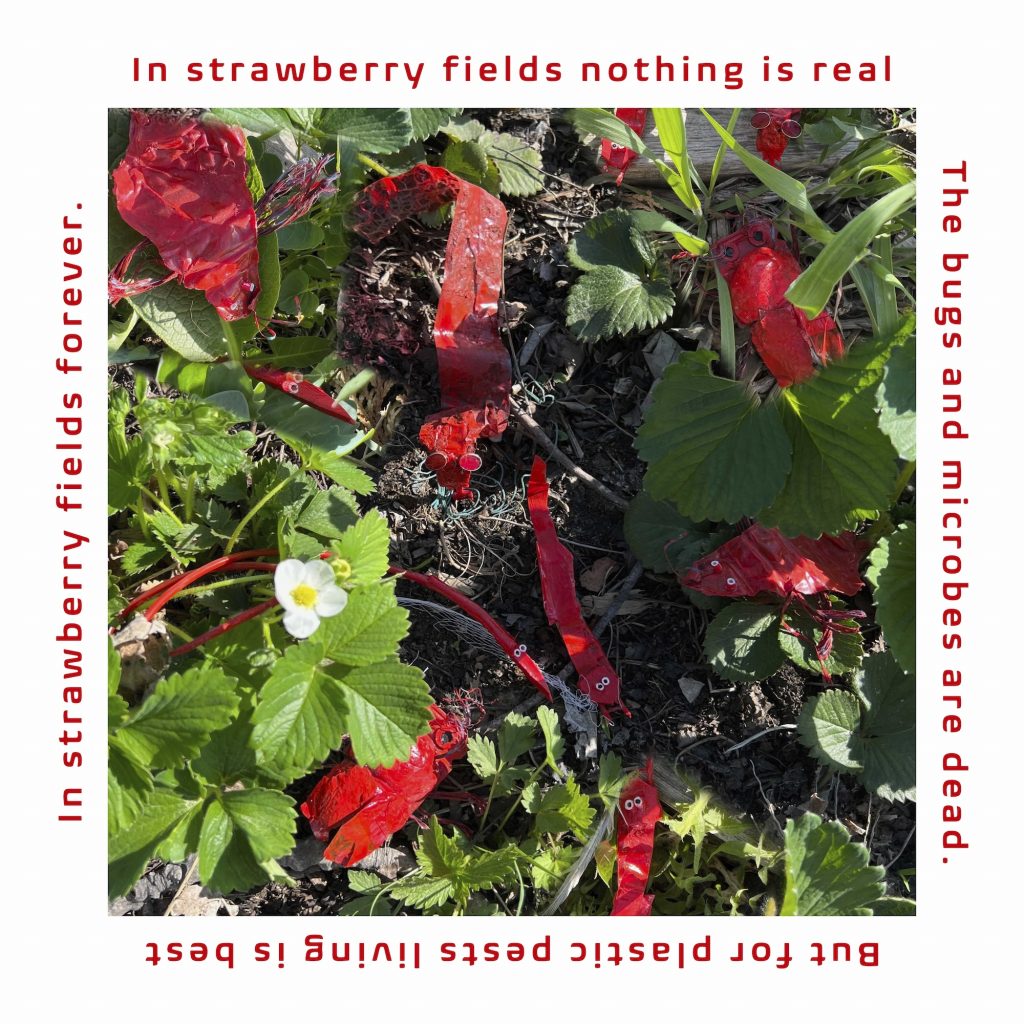
Printed by Shoebox Creations, the 20×20 inch piece was exhibited at the ASP Gallery at the Nepean Creative Arts Centre from October 2025 to early January 2026.
References:
Falconi, Isabela Brandolis Alves, Melanie Mackay, Geety Zafar, and Maria E. Holuszko. “A
Perspective on Plastics and Microplastics Contamination in Garden Soil in British
Columbia, Canada.” Pollutants, vol. 4, no. 1, 2024, pp. 153-173.
Shepherd,Beth. “My Art is Garbage.” The Goose, vol. 20, no. 2, article 21, 2025.