Over the past four years, my Plot 46 art-research project at Maple Hill Urban Farm in Ottawa has explored regenerative agriculture as both an ecological practice and a creative framework. Through growing food on my small plot, I became increasingly interested in the hidden systems that sustain life beneath our feet — particularly the soil food web, the complex assemblage of bacteria, fungi, insects, worms, and microorganisms that make healthy soil possible.
In the summer of 2025, I concluded the project with Biota Book: Re-kinning the Agricultural Landscape, an initiative that expanded my focus beyond cultivated garden beds to the many overlooked habitats surrounding them: hedge rows, stream buffers, field edges, woods, paddocks, and fallow areas. Inspired by Robin Wall Kimmerer’s concept of “re-kinning” — the active process of restoring our relationship with the more-than-human world — I wanted to acknowledge the multitude of organisms inhabiting these spaces. Rather than documenting the landscape from a distance, the Biota Book initiative invited the land itself to participate in the making of the artwork.
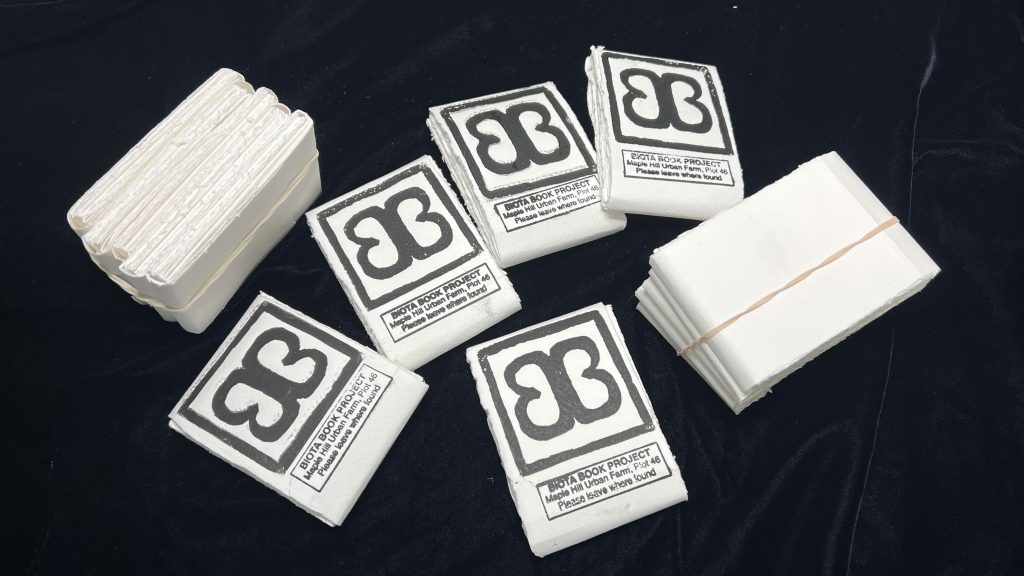
To do this, I created fifteen small handmade “biota books” from folded cotton rag paper. Adapted from soil activation assays I had previously used in my research, the books were designed to attract traces of biological activity. The paper cellulose could be consumed by fungi and microorganisms, while seeds attached with wheat paste might attract insects or small animals.
Fourteen books were placed in various habitats across the farm during a July heatwave marked by extreme temperatures and the onset of drought conditions. The map shows the 14 numbered BB sites across the farm.
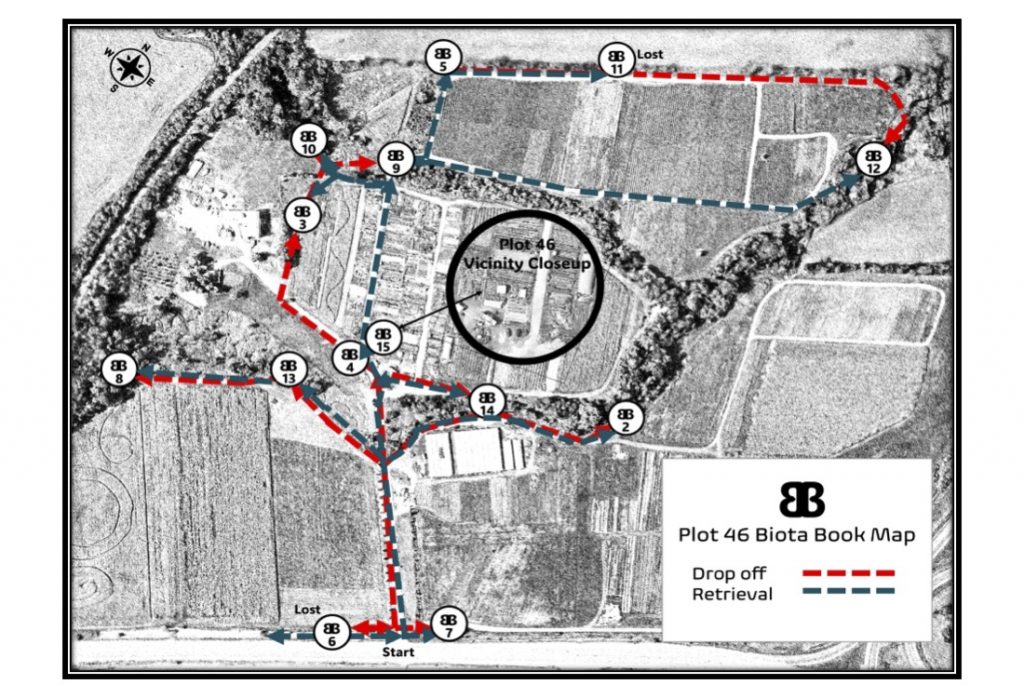
Due to the dryness, I observed much less bio-activity than I expected so the biota books remained in the field. Finally in mid-October I retrieved the packets and collected plant specimens from each site. The resulting works became collaborative ecological records — shaped not only by my own actions, but also by weather, plants, insects, fungi, and time.
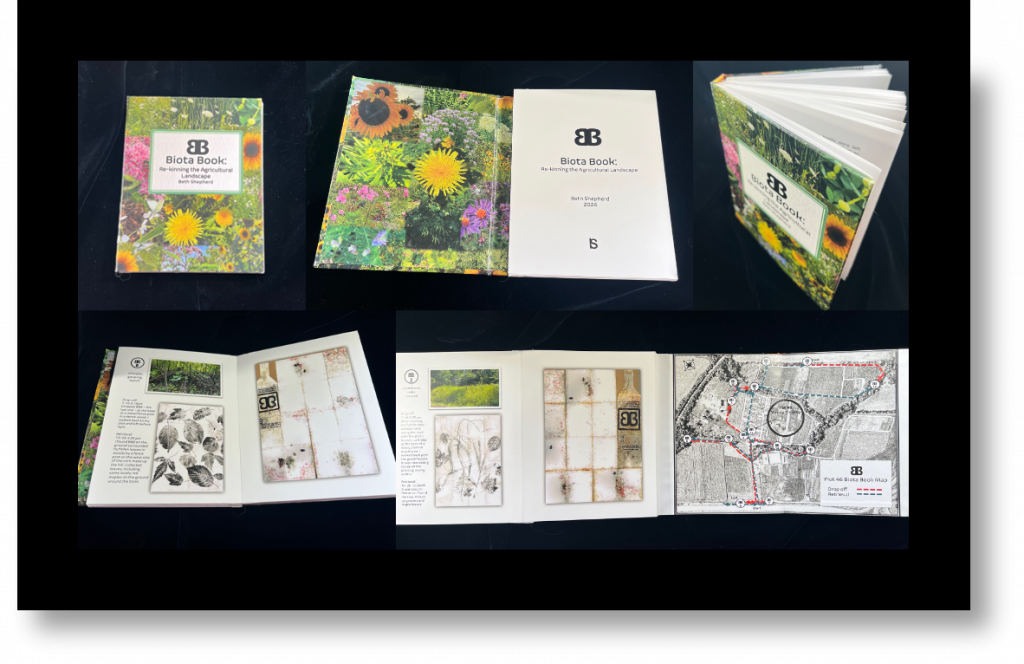
To begin to document the initiative, I scanned each unfolded sheet and the botanical prints which became the body of the book, along with my field notes. These collaborative works are incorporated into the final product: a hard case accordion book. The accordion format means that each site two-page spread can be view flat along with the map. The following images provide different perspectives on the book.